
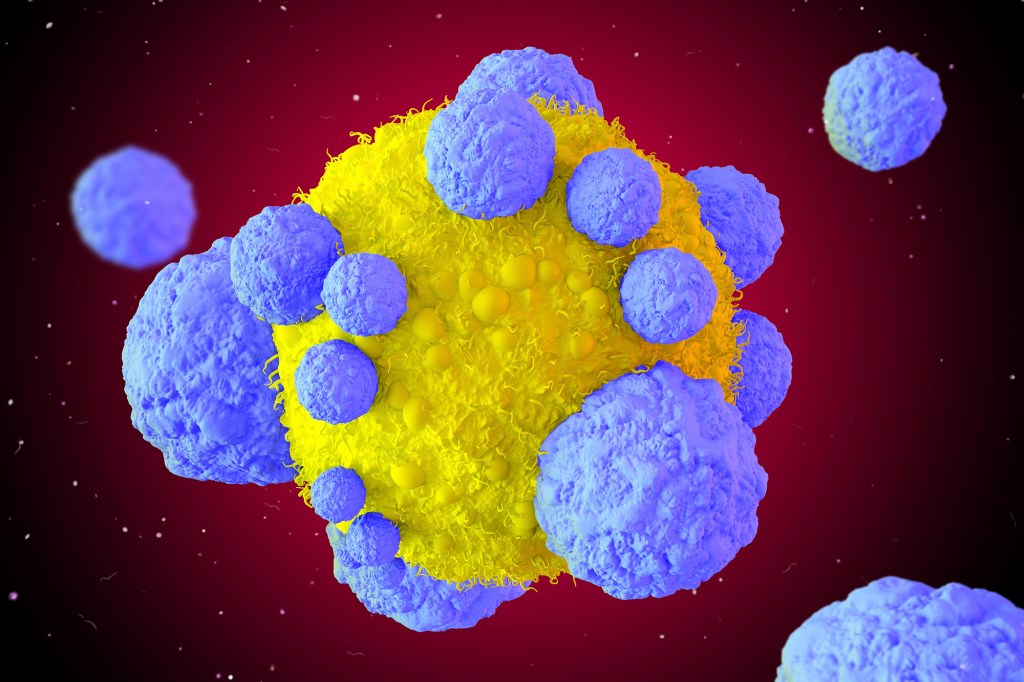
Cancer cell and T cell, illustration.
Scientists and doctors have begun to use T-Cells, a vital component of the adaptive immune system, to treat different forms of cancer. In conjunction with chemotherapy, doctors use the patient’s own immune cells to mount an effective response against cancers like Lymphoma and lymphoblastic leukemia. According to this article from the Cleveland Clinic, T-Cells become genetically modified. Then they are administered to the patient via IV. Scientists now deem them as “chimeric antigen receptors”. This means that they have the ability to bind to certain cancer cells and effectively kill them. This form of cancer treatment is incredibly effective and shows great promise for helping patients reach remission.
Normally scientists program these T-cells to target a receptor called CD19. However, sometimes this is not as effective. In this study from Nature, they hypothesized that adding CD20 and CD22 as targets would help prevent stubborn forms of acute lymphoblastic leukemia from going into remission. Scientists are still attempting to understand exactly how these T-cells work, however, they maintained that adding a receptor would benefit patients. In another study from Nature, the authors discuss the different targets that have shown great promise in curing lymphoma, an incredibly prevalent cancer. They propose different surface antigens that could help contribute to treating more cases of lymphoma.
Lymphoma is incredibly common, showcasing the need for advanced treatments for this particular kind of cancer. Side effects depend on the patient, but they can range from anemia to different neurological events like aphasia. However, most side effects can be managed with different drugs, so I think the benefits outweigh the risks. However, this treatment is incredibly expensive, costing up to $373,000 for each round of treatment. Medicare covers a lot of this cost, however does not adequately reimburse hospitals, making it very expensive. This could prevent more patients from receiving this life saving treatment. Although health insurance is something I am continually learning about, I hope that more insurance companies will consider covering these types of treatments in their plans so that more people have access. Overall, T-cell therapy sounds incredibly exciting, and I look forward to see how this type of treatment advances.

 Grace's Microbiology Blog